Continuity Cannot Be Outsourced Into Existence
The Amos report, Liverpool’s enhanced midwives and what relationship-based maternity care requires

Licence: Public Domain Mark
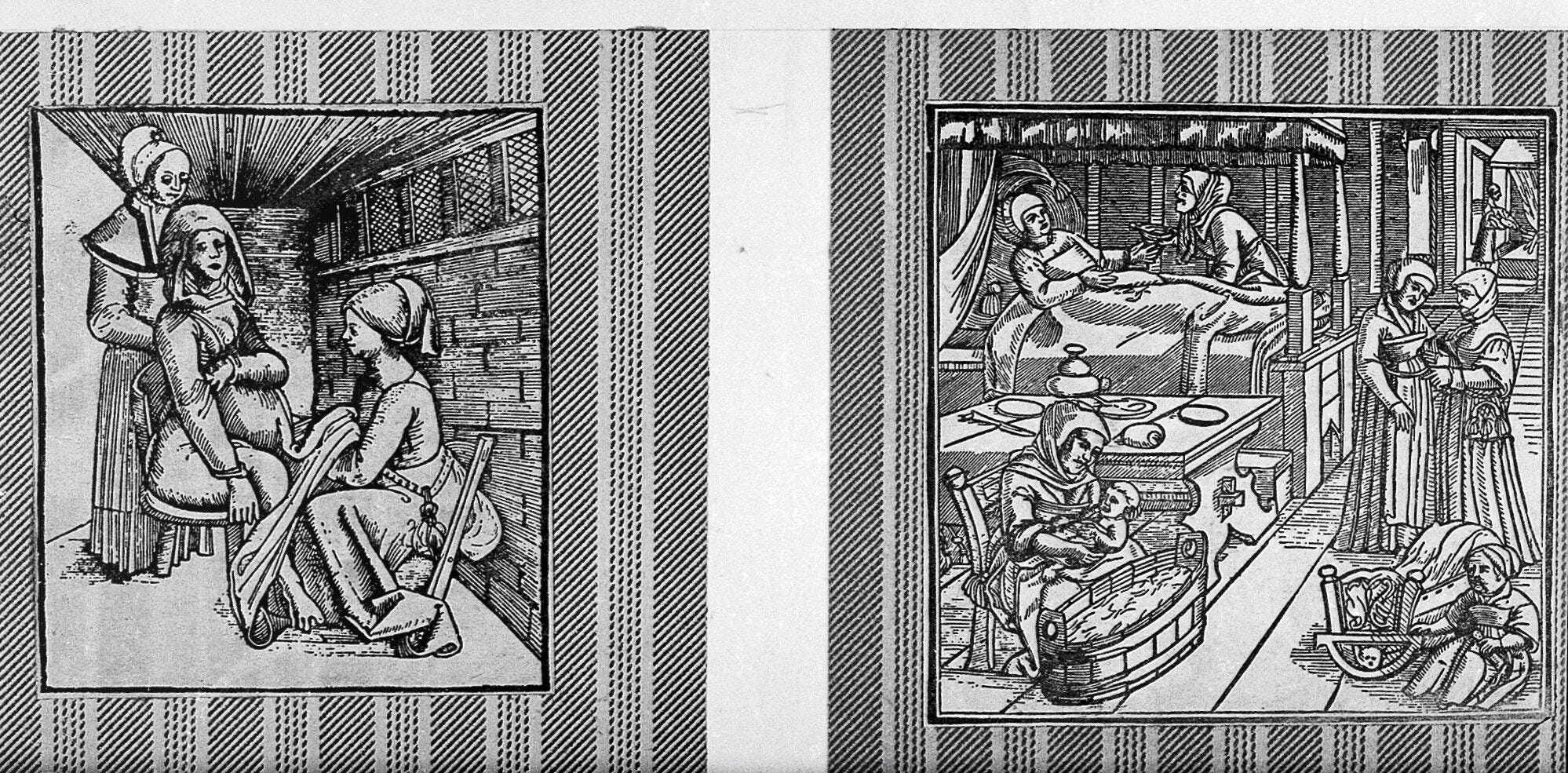
Credit: Obstetrics: midwife assisting in a birth. Wellcome Collection. Source: Wellcome Collection.
Baroness Valerie Amos’s final report into maternity and neonatal services in England is blunt: the system is not set up to deliver consistently safe, high-quality and compassionate care to every woman and family.
Women and families told the investigation that they were not listened to, heard or believed. They described repeating traumatic histories to multiple professionals, receiving mixed messages, struggling to get help when worried and feeling that nobody was holding the whole of their story. Staff described rota gaps, burnout, weak senior cover, poor digital systems, inadequate time for learning and the moral injury of knowing that they could not provide the care they wanted to give.
The report identifies a fragmented system in which antenatal, labour, neonatal and postnatal care do not join up reliably. Community and postnatal provision are too often sacrificed when acute units come under pressure. Women’s choices can disappear because there are not enough staff to support them.
One of Amos’s clearest recommendations is continuity of carer for all scheduled antenatal and postnatal care. Not as a lifestyle preference, but as part of a safer maternity system.
Continuity of carer is often described as though it were a modest service improvement: a named midwife, fewer strangers, less repetition. But for women living with poverty, trauma, violence, poor mental health, insecure housing or fear of services, it can determine whether they are known well enough for help to arrive in time.
The evidence for continuity is not sentimental. Midwife-continuity models are associated with more positive experiences of pregnancy, labour and postnatal care, and may reduce some interventions. But continuity is not a magic solution. It does not guarantee an uncomplicated birth or directly prevent every serious injury. It creates better conditions for risk, distress and changing circumstances to be recognised early, discussed honestly and acted on safely.
More than a decade ago, I evaluated Liverpool’s Enhanced Midwifery Team: six experienced midwives providing intensive, individualised care to women living with overlapping social, health and safeguarding pressures.
I read caseload data and midwives’ diaries, sat in team meetings, and spoke with midwives, health visitors, children’s-centre managers, safeguarding staff, voluntary-sector workers and women who had used the service.
The team was not designed for women who simply wanted more appointments or a gentler version of routine maternity care. It was created for women with significant mental-health needs, drug or alcohol use, learning disabilities, domestic-abuse concerns or social-services involvement. Safeguarding was the most common reason for referral, often alongside other difficulties. Most of the women lived in Liverpool’s most deprived neighbourhoods.
Each woman had a named midwife and received care at home, or another place of her choosing, through pregnancy and for up to six weeks after birth. The average was thirteen face-to-face visits. These contacts were usually at least forty-five minutes and could last far longer than the brief routine community appointments women might otherwise receive.
Continuity is sometimes imagined as a calmer version of ordinary care: the same face, a longer appointment, fewer forms to repeat. The work I saw was much more demanding than that.
In the diaries I read, a midwife’s day might begin with messages from social care, a core group meeting, unsuccessful attempts to gain access to a new referral, a home visit with a woman experiencing depression, anxiety and agoraphobia, calls to benefits services because a pregnant woman was at risk of losing housing, a postnatal debrief after a difficult birth, a Child in Need meeting, safeguarding documentation and a handover towards health visiting.
This was not an add-on to maternity care. It was maternity care braided together with safeguarding, housing, poverty, mental health, family conflict, infant wellbeing and the practical work of helping someone stay connected to services when life was unstable.
The enhanced midwives attended case conferences and core groups. They could respond quickly when a woman was in crisis. They were able to notice things that did not always appear in a booking template or a rushed clinic contact: a relationship becoming more controlling, a woman withdrawing from support, an emerging relapse, a parent becoming overwhelmed, a family in which the needs of a baby were being obscured by adult crisis.
The team became an additional safety net for women and babies, particularly where other services found engagement difficult.
Women who responded to the evaluation described care that was reliable, flexible, warm and non-judgemental. They spoke about their families being included and about having someone who did not simply pass them to the next provider. The survey response rate was low, so it cannot stand as a complete account of every woman’s experience. But its findings were echoed by health visitors and other professionals, who described reduced missed appointments, less repeated disclosure of painful histories, and earlier recognition of deterioration or disengagement.
It is important not to overclaim. The evaluation did not show that continuity somehow removed risk. These women were more likely than the wider Liverpool maternity population to book late, smoke in pregnancy, experience anxiety or depression, have premature or low-birth-weight babies, and require neonatal support. That was precisely why the service existed.
The question is not whether a named midwife can resolve poverty, violence, trauma, addiction, poor housing or an overwhelmed safeguarding system. She cannot.
The question is whether care gives women enough time, relationship and practical coordination for risk to be understood before it becomes an emergency.
This is where Amos’s report is so important. It recognises that continuity cannot be delivered by simply rearranging an already depleted workforce. The report describes midwives being moved from community and postnatal services into pressured delivery suites, leaving women without the local relationships and support those services depend upon. In some places, this contributes to suspended homebirth services, reduced access to midwifery-led units and diminished postnatal care.
One group of women should not gain continuity only because another loses it.
A safe maternity system needs enough staff across the whole pathway: community, triage, labour ward, theatre, postnatal ward and neonatal care. It needs senior clinical decision-making, good handovers, records that follow women across settings, and teamworking strong enough that people can raise concerns without fear.
Birth injury belongs in this conversation too.
Recent national figures have prompted concern about rising recorded rates of serious perineal tears and major postpartum haemorrhage. Better recognition and recording may explain part of the apparent increase, particularly for severe tears. That is not a reason to dismiss it. It means we need to ask better questions.
A severe tear is not simply a birth outcome. It can mean surgery, pain, bowel symptoms, sexual difficulty, altered body confidence, trauma, fear of another pregnancy, and effects on work and relationships. Recognition, diagnosis, repair and proper follow-up matter as much as prevention.
I know this is not abstract.
My first birth involved an episiotomy which left me with more lasting pain and difficulty with sexual functioning than I had expected. My second baby, was born at home in water. I had a serious tear which was recognised at once. I transferred in for repair under spinal anaesthetic, and I have not been left with the severe long-term complications that many women experience.
Those experiences do not lead me to a simple conclusion. Waterbirth is not automatically safe or unsafe. An episiotomy is not automatically harmful or protective. Physiological birth is not a guarantee against injury, and intervention is not always a failure.
What matters is skilled assessment, honest information, consent that is more than a formality, timely action when circumstances change, and care for the woman after the baby is born.
Pain belongs in that account too. Labour can be intense, unbearable, overwhelming, frightening or all of these at different points. Women should be offered support and pain relief without being made to feel that needing it represents failure, poor preparation or a betrayal of some preferred kind of birth.
The debate about “normal birth ideology” needs care too.
Amos’s investigation recognises the serious concerns raised in previous maternity reviews, where a preference for physiological birth appeared to contribute to delayed escalation or intervention. But it did not find evidence that this culture was widespread in the trusts it visited. Its warning is broader: care becomes unsafe whenever staff or services are guided by fixed assumptions about the right kind of birth. That includes assumptions favouring physiological birth, but also assumptions that treat intervention as inherently safer, more controllable or easier to manage.
I am not surprised that Amos did not find an overt normal-birth ideology in recent services. The language of normal birth has been heavily challenged by bereaved families, safety campaigners, litigation, reviews and the fear of getting things wrong. That challenge was necessary. Women and babies have been harmed when a vaginal or non-interventionist birth was pursued after the balance of risk had changed.
But there is a danger in the counter-reaction. Women can be left feeling that they must choose between a “natural” birth and a safe one; that hoping to avoid induction, surgery, forceps, episiotomy, severe injury or overwhelming pain is naïve or selfish; or that wanting birth to be gentle, supported, embodied and even joyful means they are failing to take risk seriously.
These are not trivial wishes. Avoiding avoidable trauma, injury, surgery and fear matters. It is part of women’s health. A positive birth experience should not be treated as a reward for those lucky enough to have uncomplicated labours, nor as a dangerous fantasy that professionals must correct.
It should be possible to say two things at once. No woman should be steered towards a vaginal, unmedicated or physiological birth when intervention is needed, wanted or safer in her circumstances. And no woman should be made to feel ashamed for hoping to avoid unnecessary intervention, or for wanting her body, pain, recovery and future sexual wellbeing to matter.
Supporting physiological birth and avoiding unnecessary intervention remain legitimate aims of maternity care. The problem begins when either becomes an institutional target rather than a possibility negotiated with the woman in front of you, using honest information, dynamic risk assessment and timely escalation when circumstances change.
The task is not to restore “normal birth” as an institutional slogan. It is to make space for women to hope for a good birth without being punished for that hope.
Trauma-informed and culturally responsive care are not optional extras
Birth is a time of unusual vulnerability. A woman may be in pain, exhausted, partially undressed, frightened, unable to process complex information, or dependent on strangers for intimate care. For women with histories of childhood abuse, domestic abuse, racism, migration trauma, disability, previous traumatic birth or involvement with services, that vulnerability can be intensified.
But trauma-informed care is not only for women with an identified history. Many women who enter maternity care without previous trauma can be traumatised by the care they receive.
I have seen women describe being pressured into procedures they did not understand, spoken to as though they were difficult or irrational, ignored when they said they were in pain, handled roughly during examinations, or left ashamed by the way they were treated while exposed and frightened. These are not minor failures of bedside manner. They can alter how a woman remembers her body, her baby’s birth, her sexuality, her confidence and her willingness to seek care again.
Women should be held in the highest regard during labour. That means believing them when they say something is wrong. Explaining before touching them. Seeking consent again when circumstances change. Making space for a woman to say no, to ask questions, to need time, to want pain relief, to want privacy, or to be frightened.
It also means understanding that culturally responsive care cannot be reduced to a checklist.
For years, I have worked alongside doulas supporting women from many different backgrounds, including within Orthodox Jewish communities. My colleague Shaima Hassan’s work with Muslim women in Merseyside shows why this matters. Women may need privacy, modesty, a female clinician where possible, religious observance, particular support around food, prayer, family involvement or the immediate care of their baby. They should not have to educate staff while in labour, nor fear that asking for what matters to them will make them seem difficult.
The answer is neither to stereotype women nor to make assumptions about what any religious or cultural group wants. It is to ask, listen, record what matters, and respond with respect.
Continuity helps because a known midwife is more likely to understand a woman’s history, communication needs, boundaries, cultural context and fears. But every member of staff has a responsibility to protect dignity. A woman should not need to be known personally in order to be treated with gentleness.
Doulas can offer another form of continuity: practical comfort, emotional support, a familiar person through a long labour, and help communicating a woman’s wishes when she is tired or overwhelmed. But doulas are not substitutes for clinical continuity. They do not diagnose, make medical decisions or carry responsibility for changing risk. Their role works best alongside midwives and doctors who know the woman, listen well and can act when circumstances change.
Women need trusted presence, culturally responsive care, and clear, kind and competent escalation.
The history of One to One Midwives shows both why women wanted continuity and why relationship alone cannot make a maternity pathway safe.
One to One offered a model many women actively sought: a named midwife, home appointments, extended postnatal care, support for homebirth and more involvement in decisions. Some women transferred because they found NHS care fragmented, impersonal or difficult to navigate. Others had previous births in which they had felt unsupported or unheard.
That demand should not be dismissed. Women were seeking something the NHS itself has repeatedly promised: personalised care, continuity, choice and a midwife who knows them across pregnancy, birth and the postnatal weeks.
But the independent review into One to One’s cessation does not support a simple story of a pioneering service crushed by an uncaring NHS. It found serious concerns about governance, staffing, record keeping, risk management, clinical oversight, information-sharing and incident processes. It also found deep structural problems in the wider system: unclear commissioning, unresolved tariff arrangements, weak shared-care pathways, inconsistent oversight and difficult relationships between One to One and local NHS providers.
The problem was not simply that One to One was independent. It was that continuity was treated as something that could be commissioned separately from the records, pathways, workforce and relationships required to sustain it.
Self-referrals, non-contracted activity, disputed provider-to-provider charges and inadequate shared pathways all contributed to instability and risk. Relationships between One to One and NHS trusts were often fraught, making the seamless care women needed harder rather than easier to achieve.
A maternity pathway is not simply a sequence of appointments. It is records that can be seen by the right people. Clear responsibility when a woman needs obstetric input. Reliable handovers. Agreement about who follows up a test, a referral or an admission. A safe route into perinatal mental-health care. A safeguarding system that recognises the person who knows the woman best. A workforce with enough capacity to do its work without being permanently overstretched.
This does not mean every woman needs thirteen home visits or a specialist safeguarding caseload. It means women who need greater continuity should not be expected to fit themselves around fragmented provision.
The Liverpool Enhanced Midwifery Team understood something maternity policy still struggles to hold onto. For some women, relationship-based care is safeguarding, prevention and health equity in practice.
It may be what enables a woman to disclose abuse, attend a hospital appointment, accept mental-health support, remain connected after a traumatic birth, have a serious injury recognised, or trust someone enough to say what is really happening.
Women should not have to choose between being known by their midwife and being safely held by the wider maternity system.
They need both.
Further reading
Baroness Valerie Amos, Independent Investigation into Maternity and Neonatal Services in England: Final Report and Recommendations
https://www.matneoinv.org.uk/wp-content/uploads/2026/06/WEBSITE_NMNI-Final-Report-and-Recommendations.pdfSandall et al., Midwife continuity of care models versus other models of care for childbearing women
https://www.cochranelibrary.com/cdsr/doi/10.1002/14651858.CD004667.pub6/fullNICE, Intrapartum care
https://www.nice.org.uk/guidance/ng235World Health Organization, Intrapartum care for a positive childbirth experience
https://www.who.int/publications/i/item/9789241550215NHS Resolution, Learning from Obstetric Anal Sphincter Injury Claims Within the NHS in England
MASIC Foundation — support and information on severe perineal trauma
https://masic.org.uk/Shaima M Hassan, Religious practices of Muslim women in the UK during maternity: evidence-based professional practice recommendations
https://doi.org/10.1186/s12884-022-04664-5Birth Trauma Association https://www.birthtraumaassociation.org/
An Independent Review into the Cessation of Maternity Services Provided by One to One Midwives
Finn’s Birth
https://deverra.blogspot.com/2011/12/finns-birth.htmlRisk, Safety and Normal Birth: Commentary and Three Women’s Stories
https://magicalbirth.wordpress.com/2015/11/15/risk-safety-and-normal-birth-commentary-and-three-womens-stories/Closing the Bones
https://magicalbirth.wordpress.com/2015/05/28/closing-the-bones/Childbirth, Pain, Dissociation and Altered States of Consciousness
https://magicalbirth.wordpress.com/2016/05/04/childbirth-pain-disassociation-and-altered-states-of-consciousness-birth-as-a-heros-journey/Painful Birth
https://magicalbirth.wordpress.com/2017/03/21/painful-birth/Physiological Birth
https://magicalbirth.wordpress.com/2017/04/24/physiological-birth/